In an era of fleeting distractions and algorithmic noise, it is a rare privilege to encounter a voice that compels us to stop, look inward, and confront the most profound questions of our existence.
Aidan Nguyen's journey from the war-torn landscapes of Vietnam to the literary stages of the United States has forged a worldview that is challenging, deeply introspective, and urgently relevant.
His books are not for the faint of heart; they are for the seeker, the skeptic, and the soul brave enough to question everything they have been taught.
A Life of Transformation and Conviction
Born and raised in Vietnam during a period of immense national turmoil, Nguyen arrived in the United States as a seventeen-year-old immigrant with little more than hope and a determination to understand the world that had shaped him.
Now sixty, he is a self-proclaimed non-religious man who holds an unshakeable belief in what he describes as a “Higher Force” — a conviction based not on inherited tradition but on observable evidence and a recurring sign that appeared in his life at least eight times.
“It was not a conversion to religion; it was an awakening to reality.”
The Seeds of a Story: What Triggered the Books
- The relentless search for evidence — he demanded proof, not the comfort of “faith alone.”
- The war of opposites — good and evil moving through the world at the same speed.
- Free will and conscious choice — the belief that we chose to be here.
- The inescapability of judgment — actions in this life carry eternal consequence.
- The unbearable question of purpose — a refusal of the view that we live, die and are forgotten.
Book One — Good vs. Evil: The First Rebellion
A prequel to our mortal reality, chronicling Lucifer's failed rebellion and the debate that followed. Before his sentence is carried out, Lucifer argues that humanity has been shielded from the true test of character by God's constant intervention.
He issues a world-altering challenge: let humanity live without divine intervention, free to choose. Left to their own devices, he insists, humans would succumb to the same pride, greed and lust for power that drove him.
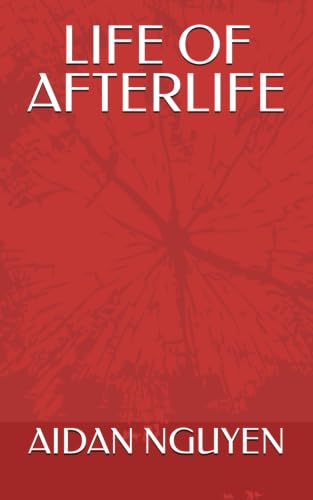
Book Two — Life of Afterlife: The Mortal Test
Four people stand before the Pearly Gates: two bank robbers, a female bank teller, and a middle-aged security guard. The story explores whether the robbers were driven by the arrogance and recklessness Lucifer predicted.
The teller, having lived righteously, is offered the world and era of her next life. The guard, offered the same reward, asks instead to be reunited with the wife who passed before him. The Judge grants his request.
“Are we inherently flawed, or are we simply untested?”
The Author's Hope: Reflect, Amend, Triumph
Nguyen wants readers to reflect honestly on the trajectory of their choices; to amend what they find wanting and return to the righteous path; and finally to triumph — to live so well that they could stand before the ultimate Judge with confidence rather than fear.
In his own words, he hopes they can “smile and say, I passed your challenge.”
Book Details
- Author
- Aidan Nguyen
- Books
- Good vs. Evil: The First Rebellion; Life of Afterlife
- Genre
- Philosophical / Speculative Fiction
- Themes
- Free will, judgment, good and evil, purpose
- Feature By
- Isaac Komolafe, Co-organizer, Book Ascendancy Community
Where to Find the Book & Author
Nguyen has crafted more than fiction; he has created a theological and philosophical framework wrapped in high-stakes narrative.
“It is a call to wake up, to take responsibility, and to live a life of meaning.”
Want to be featured next? Book Ascendancy Community writes and publishes editorial-style spotlights for authors.
Apply for a Spotlight